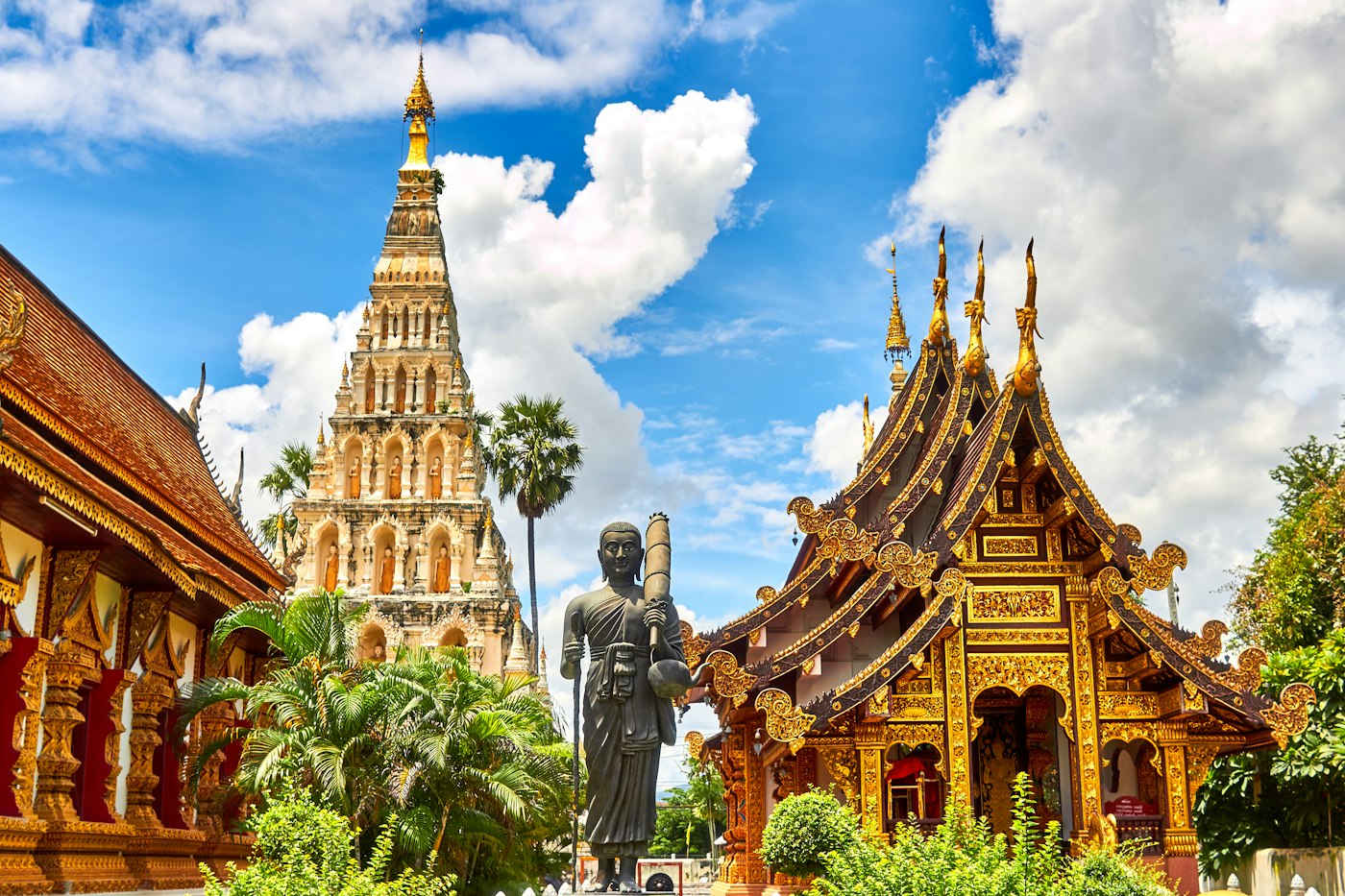
✨ Cultural Highlights
✅ 🧘 Monk Chat Sessions – 1-Hour Conversations with Buddhist Monks in English
✅ 🏔 Akha, Hmong & Karen Hill Tribe Villages – Authentic Cultural Immersion
✅ ⬜ White Temple (Wat Rong Khun) – Artist Chalermchai's Surreal Masterpiece
✅ 🔵 Blue Temple (Wat Rong Suea Ten) – Extraordinary Cobalt Interior
✅ 🌏 Golden Triangle – Thailand, Myanmar & Laos Three-Country Meeting Point
📖 Did You Know?
💡 🧘 Monk Chat programs were established so monks can practice English while visitors learn about Thai Buddhism.
💡 👘 The Karen hill tribe (Long Neck Karen) are known for their brass neck rings — a tradition with 5 centuries of history.
💡 ⬜ The White Temple has been under continuous construction since 1997 and will not be completed until approximately 2070.
💡 🌿 Chiang Rai's Akha villages produce some of Thailand's finest arabica coffee — grown at 1,200–1,500 metre altitude.
💡 🌏 The Golden Triangle was once the world's largest opium-producing region — now replaced almost entirely by coffee and tea.
• Day 1: Chiang Rai Arrival – Old Clock Tower & Night Market
Arrive at Chiang Rai Airport. Transfer to your boutique hotel near the city centre. Chiang Rai is Thailand's northernmost major city — smaller, quieter, and more authentically Thai than Chiang Mai, 180 km to the south. It is the gateway to the hill tribe villages of the north and the Golden Triangle border region. Evening: walk to the Old Clock Tower in the city centre — a spectacular golden tower designed by the White Temple artist Chalermchai Kositpipat, with a nightly light show. Continue to the Saturday Walking Street (or Night Bazaar) — Chiang Rai's most atmospheric market with hill tribe handicrafts, Yunnanese Chinese food, Akha coffee, and tribal silver jewelry.
• Day 2: White Temple, Blue Temple & Black House Full Day (B)
Three of Thailand's most extraordinary contemporary cultural sites. Morning: Wat Rong Khun (White Temple) — a living artwork and active Buddhist temple under continuous construction since 1997 by artist and devout Buddhist Chalermchai Kositpipat, who funds the entire project from his art sales and intends it as his life's offering to Buddhism. Every surface is white (symbolising Buddha's purity) and mirrored glass (representing the Buddha's wisdom reflecting the universe). The bridge to the temple crosses a lake filled with reaching hands — representing desire and suffering. Inside: murals combining traditional Thai Buddhist imagery with contemporary icons including superheroes, astronauts, and environmental destruction — a theological statement about modern Buddhism. Afternoon: Wat Rong Suea Ten (Blue Temple) — a different vision of contemporary Thai Buddhist art in deep cobalt blue, gold, and white, with extraordinary interior murals. Evening: Baan Dam (Black House) — the life's work of National Artist Thawan Duchanee, a vast complex of dark buildings filled with animal bones, skins, and horns creating a darkly beautiful counterpoint to the White Temple.
• Day 3: Monk Chat & Hill Tribe Villages (B)
The most intimate cultural day of the trip. Morning: Monk Chat at Wat Phra Singh — Chiang Rai's oldest and most important temple. The Monk Chat program pairs visitors with English-speaking monks for 60-minute conversations about Thai Buddhism, temple life, monastic discipline, and meditation. Questions about anything are welcomed: the nature of consciousness, the difference between Theravada and Mahayana Buddhism, what monks eat, whether they have mobile phones, what they were before becoming monks. The monks are articulate, thoughtful, and frequently surprising. Afternoon: drive into the mountains north of Chiang Rai to visit three consecutive hill tribe villages. Akha village: the Akha people (originally from Yunnan, China) are known for their elaborate headdresses of silver coins, beads, feathers, and brass — worn daily, not for tourists. Watch traditional weaving on a back-strap loom. Taste locally grown Akha arabica coffee — among the finest in Thailand. Hmong village: view traditional embroidery and indigo-dyed textiles. Karen (Padaung) village: meet the 'long-neck' Karen women whose brass neck rings are added incrementally from childhood — 5 rings by age 5, up to 25 rings in adulthood.
• Day 4: Golden Triangle & Mae Salong Tea Mountain (B/L)
Morning drive to the legendary Golden Triangle — the point where Thailand, Myanmar, and Laos meet at the confluence of the Mekong and Ruak rivers. Take a longtail boat tour to the midpoint of the Mekong for photos at the tri-border point. Visit the Hall of Opium Museum — a world-class 9-gallery museum on the history of the opium trade that made this region both prosperous and notorious. Afternoon: drive to Mae Salong (Santikhiri) — a cloud-capped Chinese mountain village at 1,300 metres, established by Yunnan-Chinese Nationalist soldiers in the 1960s. Tea terraces cover every hillside. Stop at a traditional tea house for a tasting flight of oolong, green, and black teas grown on the mountain. The Yunnan-style noodle soup available at Mae Salong's tea houses is extraordinary — a reminder that this Chinese village exists in Thailand. Drive back to Chiang Rai through the mountain sunset.
• Day 5: Chiang Rai Morning Markets & Departure (B)
Early morning visit to Chiang Rai's fresh produce market at dawn — the most authentic local market experience, open from 4 AM to 8 AM. Hill tribe women from surrounding villages sell produce, herbs, and prepared food alongside urban Thai stallholders. Taste jok (rice porridge with ginger), fresh-squeezed passion fruit juice, and deep-fried Chinese crullers. Browse the handicraft section for Akha silver, Hmong embroidered bags, and Karen woven textiles directly from the makers. Transfer to Chiang Rai Airport for departure. Five days in Thailand's most culturally diverse province — Buddhist monks, surreal temples, hill tribe villages, the Golden Triangle, and Chinese mountain villages. Chiang Rai is Thailand's hidden cultural gem.